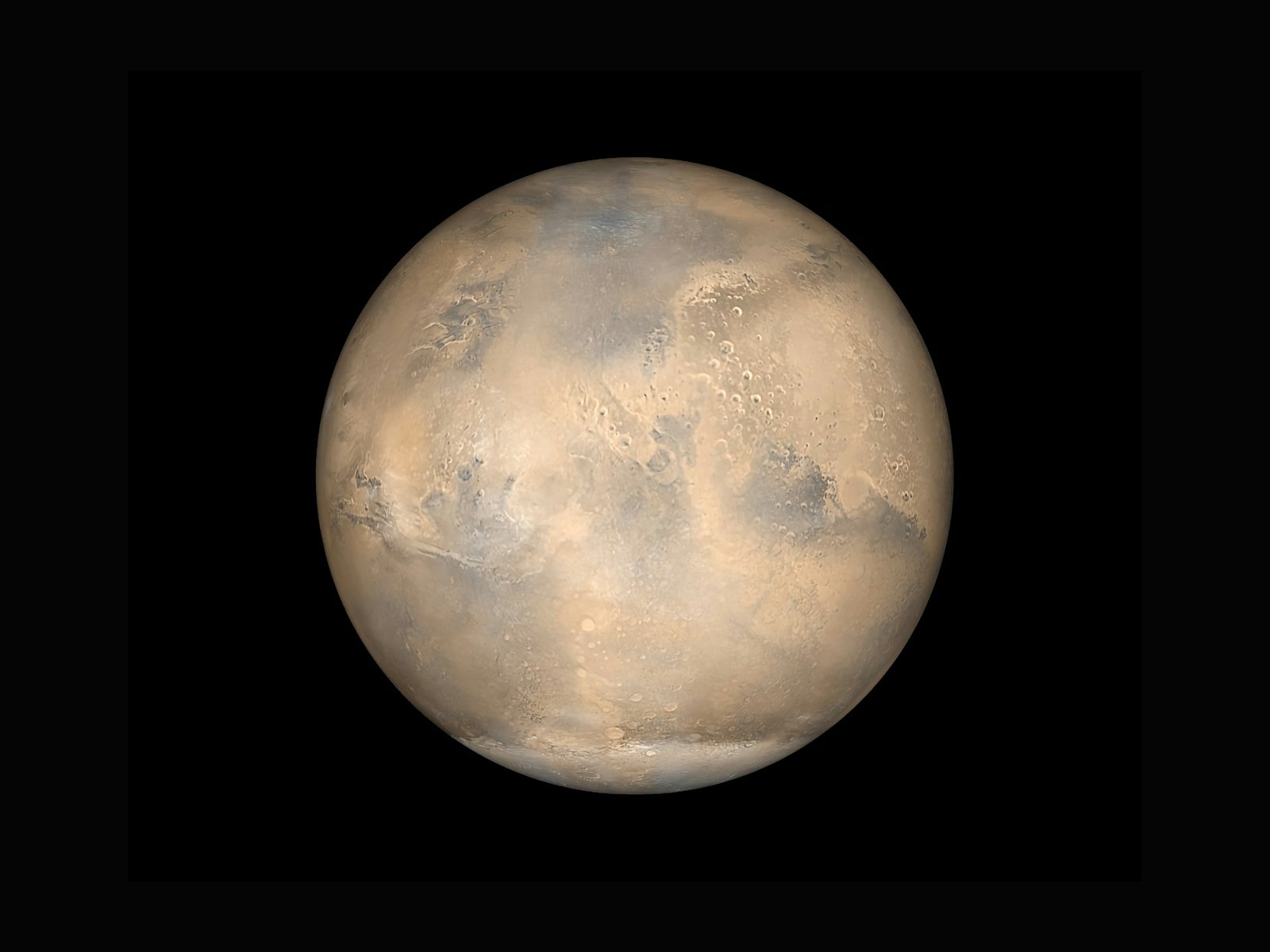
Becoming a multi-planetary species is no longer theoretical science fiction. With the rapid evolution of SpaceX’s fully reusable Starship Super Heavy launch system and the debut of the simplified Raptor 3 engine, the engineering blueprint for Mars Base Alpha has solidified. Establishing a permanent human settlement on the Red Planet is fundamentally an exercise in mass manufacturing, orbital propellant depots, and thermodynamic chemistry.
1. The Foundation: The Tyranny of the Rocket Equation Solved
The fundamental hurdle of spaceflight has always been Konstantin Tsiolkovsky’s rocket equation: to deliver 1 ton of payload to the surface of Mars, an expendable rocket must burn dozens of tons of propellant just lifting its own fuel tanks. SpaceX circumvents this physics roadblock through Rapid Full Reusability and Orbital Cryogenic Refueling:
- Low Earth Orbit Staging: A cargo Starship launches to Low Earth Orbit (LEO) using practically all its onboard fuel to escape Earth's gravity well.
- Tanker Starship Flights: Successive automated tanker Starships launch from Starbase, docking tail-to-tail in orbit to transfer 1,200 tons of subcooled liquid methane (CH4) and liquid oxygen (LOX).
- Full Departure Delta-V: Refueled with full tanks in orbit, the Starship possesses the requisite ~4.3 km/s Delta-V to execute a Trans-Mars Injection (TMI) burn, carrying a massive 100 to 150 metric tons of net payload all the way to the Martian regolith.
2. Raptor 3: The Pinnacle of Full-Flow Staged Combustion
Powering this architecture is the Raptor 3 engine—the first full-flow staged combustion cycle engine ever to fly operational missions. By eliminating external fluid tubing and printing propellant conduits directly inside internal 3D-cast walls, Raptor 3 achieves record-breaking specifications:
| Specification | Raptor 1 (2020) | Raptor 2 (2022) | Raptor 3 (Current) |
|---|---|---|---|
| Sea-Level Thrust | 185 tf (1.81 MN) | 230 tf (2.25 MN) | 280 tf (2.75 MN) |
| Chamber Pressure | 250 bar | 300 bar | 350 bar (Record) |
| Engine Mass | 2,080 kg | 1,630 kg | 1,525 kg (Integrated heat shield) |
| External Fluid Lines | Complex wire harnesses | Moderate plumbing | Zero external sensors or lines |
3. In-Situ Resource Utilization (ISRU): Making Fuel from Martian Air
A Starship landing on Mars cannot carry return propellant with it; doing so would make the rocket prohibitively massive. The return journey relies on ISRU fuel manufacturing:
- Step 1: Subsurface Ice Extraction: Automated autonomous rovers drill into glaciers in northern Martian plains (such as Arcadia Planitia) to harvest water ice (H2O).
- Step 2: Water Electrolysis:
2 H2O + Electrical Power → 2 H2 + O2. The generated oxygen is liquefied and stored in cryogenic holding tanks. - Step 3: The Sabatier Reaction:
CO2 + 4 H2 → CH4 + 2 H2O. The Martian atmosphere is 95% Carbon Dioxide (CO2). By reacting it with hydrogen at 400°C over a nickel catalyst, the facility produces pure methane (CH4) fuel.
4. Powering Mars Base Alpha: Kilopower Nuclear vs Solar Megafarms
Because Mars receives less than 43% of Earth’s solar flux and suffers from multi-month global dust storms, solar panels alone cannot sustain an industrial colony. Mars Base Alpha’s primary energy grid will depend on a hybrid architecture:
⚡ The Energy Budget Requirements:
Refueling a single Starship requires approximately 1 megawatt of continuous electrical power running for 24 months. The baseline deployment includes five 100-kilowatt compact nuclear Stirling reactors (developed in partnership with NASA’s Kilopower project) supplemented by 10 football fields of high-efficiency roll-out thin-film solar arrays.
5. Radiation Shielding: The 3D-Printed Regolith Habitats
Without an active planetary magnetosphere, the surface of Mars is subjected to solar particle events (SPEs) and cosmic galactic rays. While astronauts can survive short-term in the reinforced cabins of grounded Starships, long-term survival demands burying habitats beneath 2 to 3 meters of Martian regolith. Automated 3D-printing rovers will excavate volcanic lava tubes and spray sintered basalt domes to create radiation-shielded pressurized living quarters.
6. The 20-Year Timeline to a Self-Sustaining Civilization
The journey unfolds across synodic launch windows every 26 months:
- Window 1 (Uncrewed Scouts): Two cargo Starships land to confirm water ice accessibility and validate atmospheric entry thermal tiles.
- Window 2 (ISRU Infrastructure): Four Starships land automated solar fields, robotic drills, and the pilot Sabatier chemical plant.
- Window 3 (The First Pioneers): The first crew of 12 astronauts touches down to commission the fuel plant and assemble permanent habitats.
- Window 4+ (The Great Fleet): Flotillas of 50 to 100 Starships departing during every orbital alignment, building toward a city of 1,000,000 residents by 2050.